
Underground pipe leak detection traces pressurized water loss along buried service lines and irrigation mains without excavation. We acoustic-scan the pipe route, identify the leak signal, mark the exact location, and give the repair crew one dig point. The whole process typically takes one to two hours on a residential property.
Why Underground Leaks Go Undetected in Bradenton
Bradenton's soil is predominantly sandy with good drainage. This is a beautiful thing for landscaping — but it means underground pipe leaks don't pool at the surface the way they would in clay-heavy soils. A service line losing 200 gallons per day can disperse entirely through the sand bed before reaching the surface, leaving the grass green and the leak invisible. The only early indicator is a Manatee County water bill that doesn't match household usage.
The water service line between the Manatee County Utilities meter and your home is private property — your responsibility. In most Bradenton neighborhoods built before 1995, that line is Schedule 40 PVC, copper, or older galvanized steel. These materials have a finite service life, and the combination of root pressure from Bradenton's mature oak and palm trees, seasonal soil movement in sandy substrates, and Florida's corrosive groundwater accelerates the failure timeline.
How We Locate the Leak
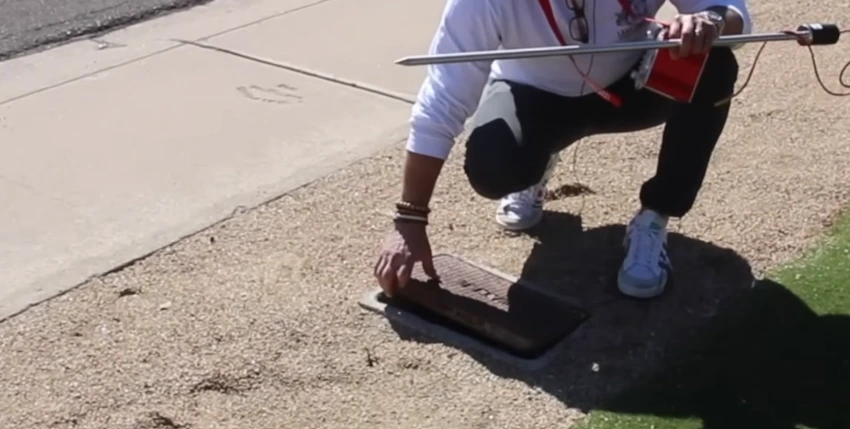
Meter-side confirmation
We start by watching the Manatee County water meter with all indoor fixtures off. If the meter is still recording flow, there's an active loss. We can isolate whether the loss is on the service line between the meter and the house (by closing the main shutoff at the house and checking if the meter stops), or on interior plumbing. This narrows the search before we touch the acoustic equipment.
Acoustic ground microphone scanning
Working from the meter toward the house — or along the irrigation main from the backflow preventer toward the zones — we scan the soil surface with a calibrated ground microphone. Pressurized water escaping from a pipe failure creates turbulent noise at a frequency that carries through sandy soil. The signal strengthens as we approach the leak point, allowing us to mark the location with precision before any soil is moved.
Tracer gas method
For leaks that are slow enough that acoustic detection is borderline, we can inject a safe tracer gas mixture into the pressurized line. The gas — a harmless hydrogen and nitrogen blend — escapes at the leak point and migrates upward through the soil. A surface probe detects the gas concentration, and the highest reading pinpoints the leak.
Common Underground Leak Types in Bradenton
- Service line corrosion — galvanized steel lines that have rusted at a joint or along the pipe wall
- PVC joint separations from root pressure — live oak and ficus root systems in West Bradenton and Palma Sola areas exert lateral pressure on buried PVC over years until a glued joint gives way
- Irrigation lateral cracks — thin-wall Schedule 40 PVC under seasonal stress or lawn maintenance equipment impact
- Meter coupling failures — the connection between the Manatee County meter and the private service line fails in older meter boxes, particularly after utility work on the main
- Water main line breaks at street crossing — service lines that run under concrete driveways or sidewalks can fail at the concrete edge where differential movement stresses the pipe
In Bradenton's sandy soil, underground leaks don't always surface visually. A property can lose hundreds of gallons per day without any pooling on the surface. A Manatee County Utilities bill that's significantly higher than your household usage baseline — especially if it's been climbing over multiple billing cycles — is the most reliable early indicator.
Underground Leak FAQ
Shut off the main valve at the house (usually near the water heater or in a utility closet). If the meter stops moving, the leak is inside the house — check for running toilets, dripping faucets, and appliance supply lines. If the meter continues to move with the house main shut off, the loss is on the service line between the meter and the house — that's an underground leak on private property. Call us and we'll confirm it acoustically.
Standard homeowners policies typically cover the cost of accessing and repairing a sudden and accidental pipe failure — but coverage varies significantly by carrier and policy. Underground service line coverage is also available as a specific endorsement through some insurers. Check your declarations page or call your agent to confirm. We provide a written detection report documenting the method and findings — the format most carriers request for service line claims.