
A wet ceiling or stained wall in a Bradenton home can point to a supply line leak, a drain leak, a wax ring failure, a roof penetration, or even condensation from an air handler. We work through a systematic elimination process to identify the actual source — the information your repair contractor needs before doing any work.
Why Ceiling and Wall Leaks Are Difficult
Water moves. It follows gravity and the path of least resistance, which means where it exits the drywall or ceiling material may be several feet — or several rooms — from where it originated. In Bradenton's concrete block construction, water can travel along block cavities and re-emerge at a location that seems completely unrelated to the actual failure point.
This is exactly why opening a wall immediately is usually a mistake. Without knowing where the leak source is, a contractor may cut an access panel in the wrong location, find nothing, and cut another panel. Each cut increases repair cost and disruption. A leak detection investigation that confirms the source before any drywall is cut saves that entire process.
Common Ceiling and Wall Leak Sources in Bradenton
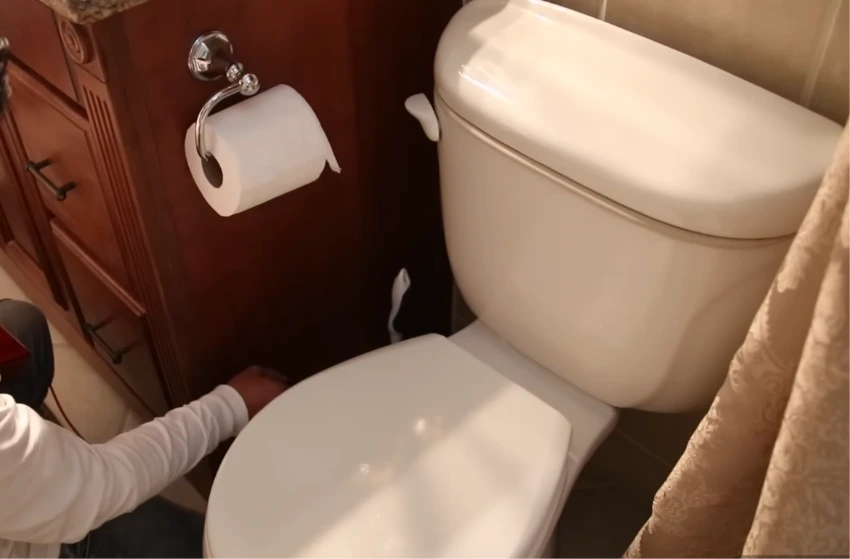
- Supply line leaks inside wall cavities — typically at copper-to-fixture connections near bathrooms and kitchens; slow drips that accumulate over weeks or months before staining appears
- Wax ring failures — a toilet wax ring that's no longer sealing allows drain water to seep under the toilet and migrate into the subfloor, appearing as a stain on the ceiling below in two-story homes
- Shower pan or surround failures — grout and caulk degradation in showers allows water to penetrate the surround and wet the subfloor or wall cavity behind the tile
- Air handler condensate pan overflows — Florida AC systems produce significant condensate; a blocked drain line overflows the secondary pan and the water finds the nearest drywall penetration
- Roof penetration leaks — Bradenton's summer storm season produces driven rain that can find its way through roof vent flashings, ridge caps, or damaged shingle sections; appears as ceiling staining that correlates with rain events
- Neighbor unit leaks in condos — in multi-story condos from Sarasota to Lakewood Ranch, a supply or drain failure in the unit above presents as a ceiling leak below with no source in the affected unit
Investigation Method
We start with a thorough visual assessment — looking at the staining pattern, the ceiling material, proximity to fixtures, and whether the moisture is active or dried. We use a moisture meter to map the wet zone and identify the direction the water is traveling. For active leaks, we can often isolate the source by shutting off branches of the plumbing and observing whether the moisture source changes.
For supply line leaks in walls, acoustic amplification can often detect the drip through drywall without opening anything. For condensate and roof penetration leaks, we look at the roof drainage path and the AC equipment location relative to the affected ceiling area.