
A slab leak is a water supply or drain pipe failure beneath the concrete foundation of a home or building. In Bradenton, the most common cause is pinhole corrosion in copper hot water lines. We locate the leak using acoustic amplification and pressure isolation — without cutting into the slab until the exact point is confirmed.
Why Bradenton Homes Develop Slab Leaks
Bradenton's housing stock is heavily concentrated in single-story concrete slab construction. Most of the city's residential neighborhoods — South Bradenton, West Bradenton, Bayshore Gardens, Palma Sola, and the older parts of Cortez Road — were built between the early 1960s and the 1990s. That means a large percentage of local homes now have copper supply lines that are between 30 and 60 years old, running directly through or under poured concrete.
Florida's soil conditions accelerate the problem. Bradenton's sandy substrate shifts seasonally, which introduces micro-movement stress at pipe joints and bends. The area's groundwater is mildly corrosive to bare copper — particularly on the hot side of the system, where thermal cycling causes pipe walls to thin unevenly over time. Manatee County Utilities delivers water at pressures that, combined with a corroded pipe wall, create conditions for pinhole failures that leak continuously at a rate that can range from 10 to 160 gallons per hour.
In terrazzo-floored homes — common in the older parts of Bradenton — a slab leak can go undetected for months because the floor surface is harder and the moisture disperses laterally through the sand before surfacing. Tile and laminate over concrete accelerate detection because they lift or bubble faster.
Signs You Have a Slab Leak
These are the indicators we hear most often from Bradenton homeowners before they call:
- A Manatee County Utilities water bill that's two to three times the usual amount with no change in household habits
- Warm areas on the floor, especially in hallways between bathroom and kitchen
- The sound of water running — a faint hiss or rushing sound — when every fixture is off and the dishwasher and washing machine are not running
- Mold smell in a room without any visible source of moisture
- Tiles that suddenly feel loose or grout that has cracked along a specific line
- The hot water heater running more frequently than usual, or the recovery time increasing without a change in usage
- Soft or spongy spots in laminate or vinyl plank flooring
A straightforward way to check for yourself: turn off every faucet, appliance, and irrigation valve in your home. Note the small triangle or dial on your Manatee County water meter. Wait 15 minutes without using any water. If the meter has moved, there's an active leak somewhere in your private plumbing system.
How We Locate Slab Leaks in Bradenton
Slab leak detection is a systematic process of elimination. We don't make assumptions about where the leak is — we work through the plumbing methodically until the signal is unambiguous.
Pressure isolation testing
We begin by separating your hot and cold supply lines. By isolating each side and monitoring pressure drop, we can determine quickly whether the leak is on the hot side (most common in Bradenton's older homes) or cold side. This tells us which pipe to listen for and narrows the search corridor significantly.
Acoustic listening (ground microphone)
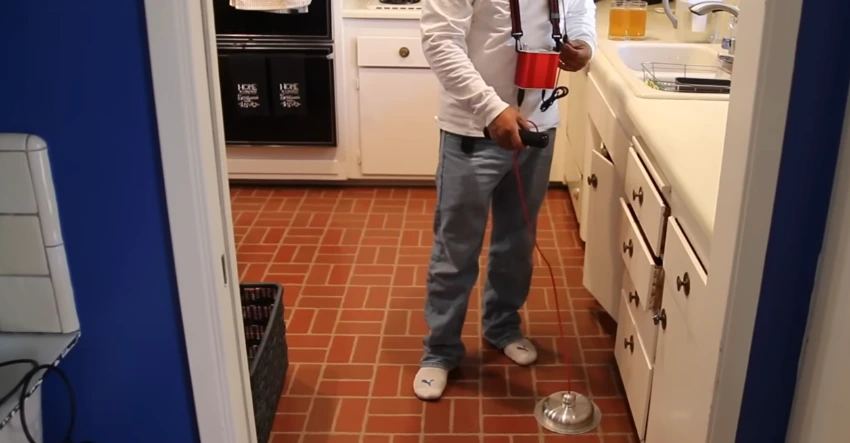
Using a calibrated acoustic ground microphone — designed specifically for this application — the technician scans along the pipe route beneath your floor. Water escaping from a pressurized line at slab level produces a distinctive turbulent sound. As the microphone moves closer to the leak, the signal strengthens. We systematically cover the pipe path until the signal peaks and stabilizes, then mark the location.
Thermal imaging (when applicable)
An active hot water line leak under a slab will create a heat pattern visible with an infrared camera — particularly effective on ceramic tile and vinyl floors. We use thermal imaging as a secondary confirmation layer when acoustic results need verification, or when the leak is slow enough that acoustic signals are borderline.
Marking and documentation
Once confirmed, we mark the floor at the detected location and document it photographically. The written report we provide identifies which line is leaking (hot or cold), the detection method used, the marked location with measurements from fixed reference points, and our recommended next step. Your plumber receives a clear target and can often complete the repair with a single small excavation.
Temporary Repair During Detection
In many cases, we can apply a temporary clamp or compression fitting to the leaking pipe after excavating the marked point — stopping the active water loss before the permanent repair plumber arrives. This is not a permanent fix, but it allows you to restore water service to the home while waiting for the repair appointment. We only do this when the location is confirmed with certainty and when the pipe condition allows a clean temporary seal.
Neighborhoods We Serve for Slab Leaks
We respond to slab leak calls throughout Bradenton and surrounding Manatee County communities. The neighborhoods we visit most frequently for this service include:
- South Bradenton (34210) — high concentration of 1960s–1980s slab construction, terrazzo floors common
- West Bradenton (34205, 34209) — established residential neighborhoods with mature copper pipe systems
- Bayshore Gardens (34207) — mid-century ranch-style homes with post-tension slab construction
- Palma Sola (34209) — waterfront and near-waterfront properties with varying soil movement
- Sabal Harbour, River Club, Peridia (34203) — golf community homes from the 1990s, early-generation copper systems
- Lakewood Ranch (34202, 34211) — newer construction, different failure modes but slab leaks occur in early-era phases
- Anna Maria Island (34216) — coastal salt-air environment accelerates copper corrosion; salt intrusion compounds the problem
Slab Leak Detection vs. Slab Leak Repair
Detection and repair are two separate services performed by different specialists. We perform detection. Your plumber performs the repair. This division exists because the two tasks require fundamentally different skills, tools, and licensing.
After we provide the marked location and detection report, your plumber typically has three repair options for a Bradenton slab leak: spot repair (excavating directly at the marked point and replacing that section of pipe), rerouting (bypassing the failed pipe segment by running a new line above the slab), or whole-house repipe (replacing all copper lines throughout the slab with CPVC or PEX). The right choice depends on pipe age, overall pipe condition, number of active and potential failure points, and your insurance situation.
Slab Leak Detection FAQ
The most common cause in Bradenton is pinhole corrosion in copper pipes. Florida's mildly acidic groundwater, combined with thermal cycling on the hot water side and the abrasion that occurs where copper pipe contacts concrete, causes thin-wall copper to develop tiny perforations over 20 to 40 years. Soil movement from Bradenton's sandy substrate also stresses pipe joints over time. Older homes built between the 1960s and 1990s in neighborhoods like South Bradenton, West Bradenton, and Bayshore Gardens are most frequently affected.
The most reliable indicators are a significantly higher Manatee County water bill without a usage change, warm spots on the floor near the bathroom or kitchen, the sound of running water when all fixtures are off, unexplained mold smell, and buckling or lifting floor materials. You can check your meter yourself: shut off all water, note the meter reading, wait 15 minutes without using water, and check if the meter has advanced. Movement confirms an active leak somewhere in your system.
A dedicated leak detection specialist — as opposed to a general plumber — uses acoustic ground microphones, pressure isolation testing, and thermal imaging. A general plumber without detection equipment may rely on educated guesses based on where moisture surfaces, which often leads to multiple excavation points before finding the actual leak. The detection process we use produces a mark on the floor with a typical accuracy of within one to two inches of the actual pipe failure.
Yes — particularly in homes with terrazzo or thick tile floors over a high-porosity sand bed. The water disperses laterally through the sand and may take months to migrate to a location where it becomes visible. In the meantime, it saturates the sub-base and can affect flooring, create ideal conditions for mold growth in wall cavities, and waste tens of thousands of gallons of water. A water bill that progressively climbs over several months is often the first and only early indicator before visible symptoms appear.