
Step One — Confirm It's a Leak With the Meter Test
Before calling anyone, do this. It takes 30 minutes and tells you definitively whether active water is escaping your plumbing system right now.
Turn off everything
Shut off every faucet, toilet supply line, dishwasher, ice maker, and the irrigation controller. Nothing that uses water should be running.
Read the meter
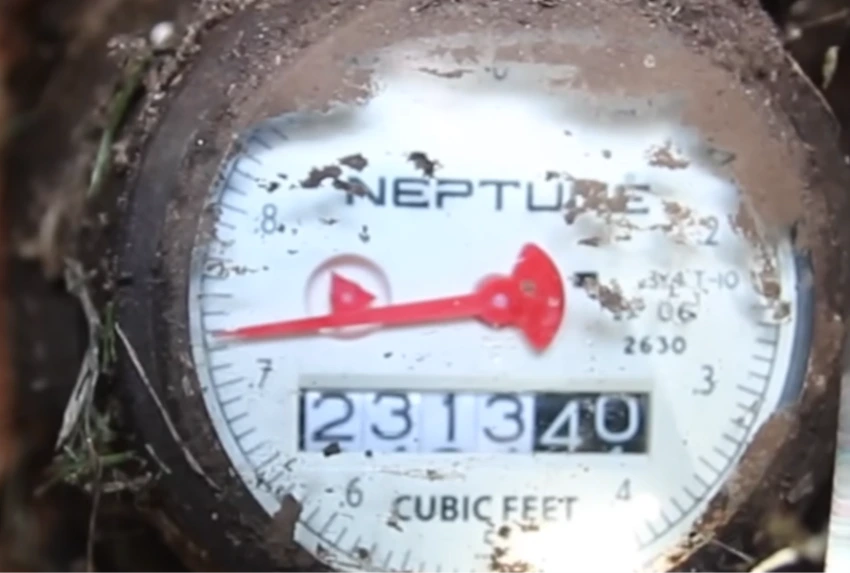
Your Manatee County water meter is in a ground-level box near the street. Open the lid and note — or photograph — the current reading. Look for a small rotating triangle or leak indicator.
Wait 30–60 minutes
Don't use any water — no toilet, no faucets, nothing. If you suspect a slow leak, wait the full 60 minutes for a clearer result.
Read again
If the meter has moved, or the triangle is spinning, water is actively escaping your private plumbing system. If unchanged, the high bill may have a different cause — check usage changes first.
Meter moved? Call us.
A moving meter with all fixtures off confirms an active leak. We take it from there — acoustic detection, pressure isolation, and thermal imaging to find exactly where the water is going.
Manatee County digital meters: Newer digital meters in Bradenton show real-time flow rates and, in some cases, have already flagged your account automatically for high consumption. If you received a high-usage notification from Manatee County Utilities, the confirmation step is already done — the leak exists. The question is where.
The Five Most Common Causes of a High Water Bill in Bradenton
1. Slab Leak — The Most Expensive Miss
Bradenton's pre-2000 housing stock sits on concrete slab foundations with copper supply lines running beneath. After 30–60 years in contact with Floridan Aquifer hard water (15–20 grains per gallon) and chloramine-treated water from Manatee County Utilities, copper pipe walls develop pinhole failures. Water escapes under supply pressure, soaks into the sandy soil beneath your slab, and often never surfaces at the floor level before the bill starts climbing. A slab leak losing 0.5–2 gallons per minute represents $50–$200 in additional monthly water charges — quietly, every month, until someone finds it.
Slab leaks are our most common high-bill investigation finding in Bradenton homes. Bayshore Gardens, South Bradenton, West Bradenton, and neighborhoods along the Cortez Road corridor carry the oldest pipe stock and the highest occurrence rate. See our slab leak detection page for a full breakdown of the detection process.
2. Underground Service Line Break
The water service line between your Manatee County Utilities meter and your home's foundation runs underground through your yard — and it's your property, not the utility's. When it cracks or a joint fails, water escapes into the soil and may never surface as visible ground wetness in Bradenton's porous sandy soil. The meter registers every gallon. We locate service line breaks using electronic pipe tracing and acoustic ground microphones. More about underground pipe detection.
3. Irrigation System Failure
A buried irrigation lateral that cracks, or a zone valve that sticks open, can run hundreds of gallons daily without any surface sign in Manatee County's sandy, absorptive soil. Irrigation failures account for a significant portion of unexplained high-bill investigations we run in Lakewood Ranch, Parrish, and the Ellenton corridor — communities with extensive underground HOA and residential irrigation systems. Shutting off your irrigation controller and re-checking the meter immediately tells you whether irrigation is the source. Irrigation leak detection details.
4. Running Toilet
A toilet with a failed flapper seal can run 100–400 gallons per day silently — enough to meaningfully raise a Manatee County bill without any audible dripping. The test: put a few drops of food coloring in the tank. Don't flush. Wait 15 minutes. If the color appears in the bowl without flushing, the flapper is leaking. This is the easiest fix — a new flapper costs under $10 — and it's always worth checking before assuming a slab leak.
5. Pool Autofill Running Continuously
Bradenton pools equipped with automatic fill valves will run continuously if the pool is losing water faster than evaporation — which happens when there's a pool plumbing or structural leak. The pool level looks normal because it's being constantly topped off. The water bill tells the real story. Disconnecting the autofill and monitoring the pool level separately from the meter will confirm whether the pool is the source. Pool leak detection process.
When to Call Us Instead of Investigating Further Yourself
If you've checked the toilet, confirmed the meter is moving, ruled out irrigation as the source, and your water level is stable — you have a leak in your plumbing that isn't showing any surface symptoms. This is the scenario that requires detection equipment. A slab leak or underground service line failure will not present itself with visible water. The detection process requires acoustic listening devices, electronic pipe tracing, and pressure isolation — not a flashlight and a wrench.
Can You Get a Credit From Manatee County Utilities?
Yes — Manatee County Utilities offers a leak adjustment credit for residential customers who demonstrate that an underground plumbing leak caused an abnormal billing period and that the leak has been repaired. The credit is typically limited to one billing cycle. You need a written statement from a licensed plumber confirming the repair was made. Our detection report — documenting the leak location and method — combined with the plumber's repair invoice typically satisfies their documentation requirement.
Contact Manatee County Utilities Customer Service at (941) 792-8811 to initiate the credit application process once the leak is repaired. The City of Bradenton Water and Sewer Department has a similar process for customers on their system.
High Water Bill — Investigation FAQs
A typical residential slab leak losing 1 gallon per minute wastes approximately 1,440 gallons per day — roughly 43,000 gallons per month. Over three months, that's nearly 130,000 gallons of water lost to your sandy soil for free. At Manatee County Utilities rates (approximately $4–$6 per 1,000 gallons in the upper tiers), three months of a 1 GPM slab leak represents $500–$800 in excess water charges. Larger leaks — 2–3 GPM — produce proportionally higher losses. The detection and repair cost is almost always lower than continuing the leak through another billing cycle.
The meter and the utility's distribution main — the infrastructure in the street — is Manatee County's responsibility. Everything from the meter into your property line and home is yours. When the utility confirms the meter is running with no issues on their side, the source of the loss is in your private plumbing. They've done their part of the investigation. Our job is the private side.
It depends on how long the leak has been running and what it's doing below the surface. An $80 monthly water bill increase represents a slow, sustained loss — possibly 15,000–20,000 gallons per month quietly soaking into the soil beneath your slab foundation. In Bradenton's clay-mixed sandy soil near the water table, sustained moisture beneath a slab causes long-term substrate erosion that can eventually affect foundation stability. The water cost is visible; the foundation risk is not. For homes with pre-2000 copper plumbing and a persistent unexplained bill increase, a detection visit is a reasonable precaution regardless of the dollar amount.
Yes — this is very common in Bradenton, and it's specific to our soil conditions. In other parts of the country, an underground leak eventually surfaces as standing water or a soggy lawn. Manatee County's sandy, porous soil absorbs water downward before it can surface. A slab leak can run for months with no visible floor symptoms — no warm spots, no wet areas, no visible cracks — while steadily raising the water bill by $50–$150 per cycle. The meter test is the only reliable early detection method available to homeowners. Do it today if your bill has been elevated for more than two months.